- Chaises de cuisine & salle à manger
- Canapés
- Fauteuils
- Fauteuils lounge
- Chaises
- Chaises cantilever
- Chaises et Tabourets de bar
- Tabourets
- Bancs & Chaises longues
- Poufs poires
- Chaises de jardin
- Chaises enfants
- Chaises à bascule
- Chaises de bureau
- Chaises de conférence
- Fauteuils de direction
- Pièces détachées
- ... voir tous les sièges
- Étagères & Armoires
- Bibliothèques
- Étagères murales
- Buffets & Commodes
- Meubles TV
- Caissons roulants et Meubles d’appoint
- Meubles de bar
- Garde-robes
- Petits rangements
- Pièces détachées
- ... voir tous les rangements












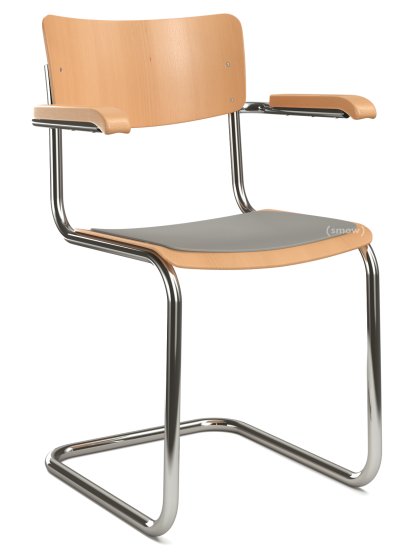
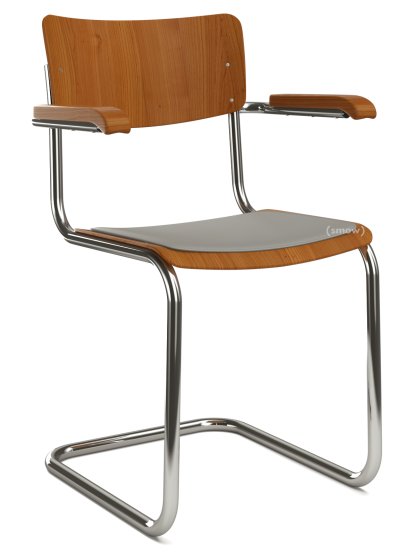
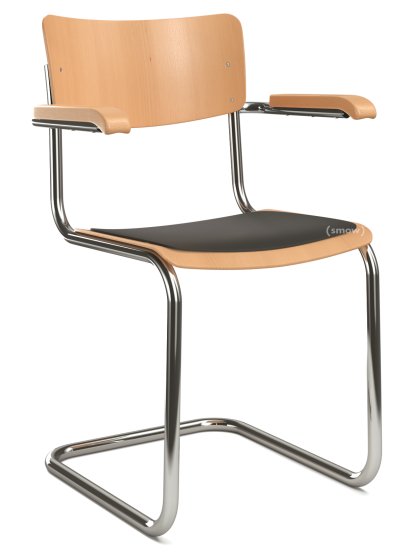
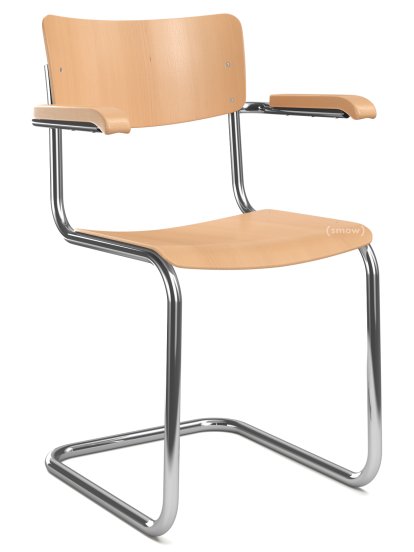
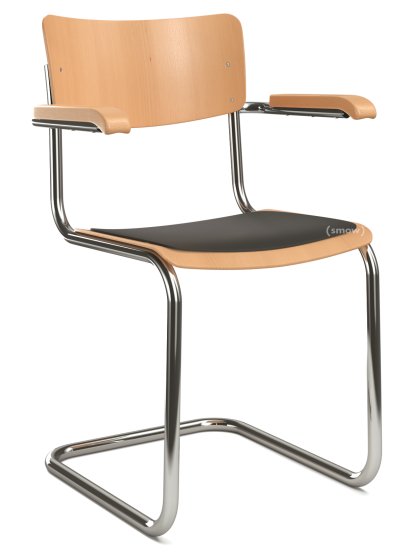
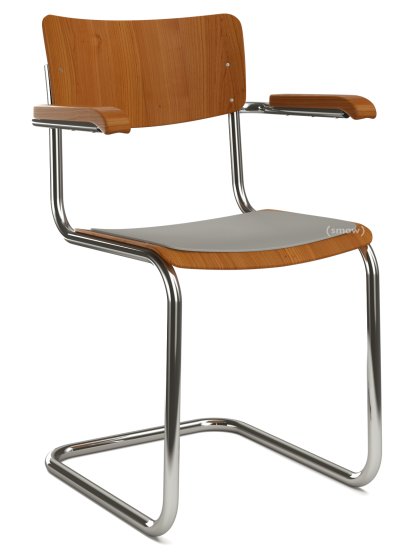
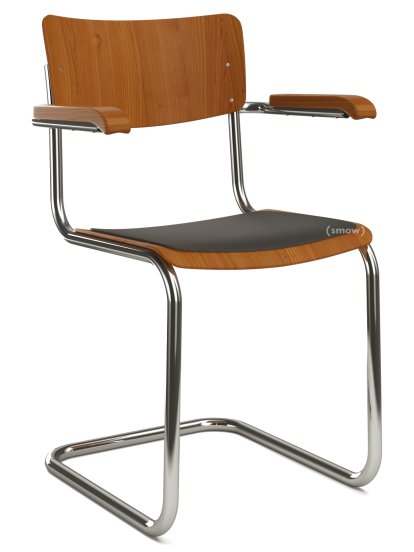
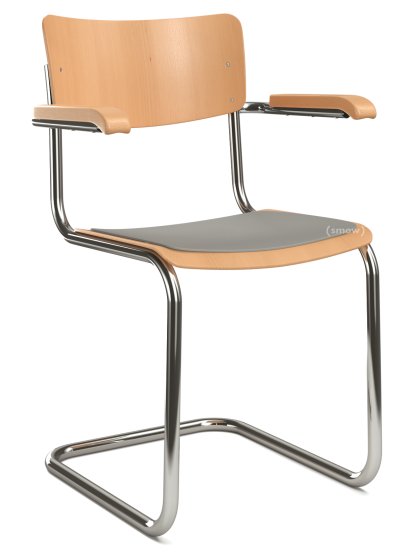
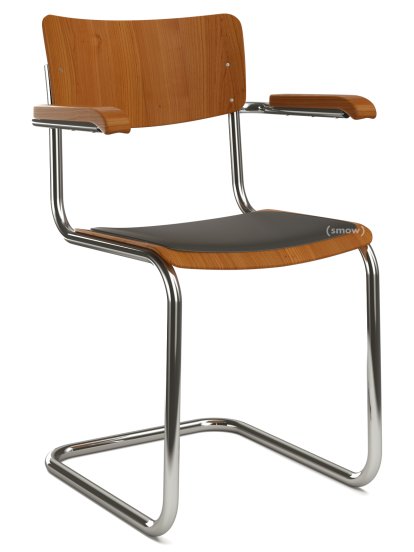
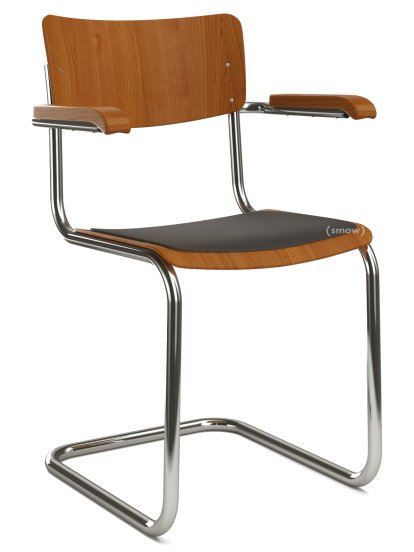
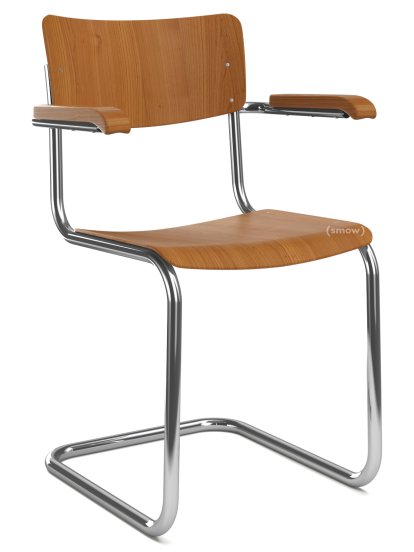
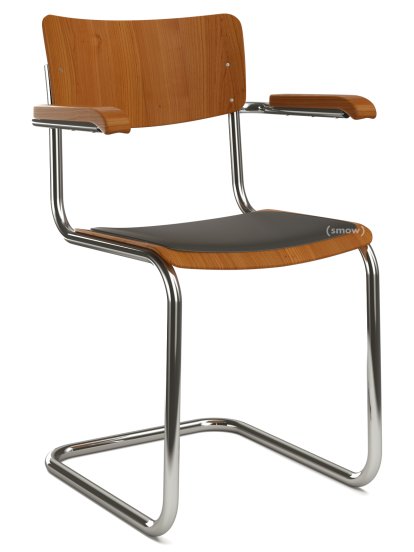
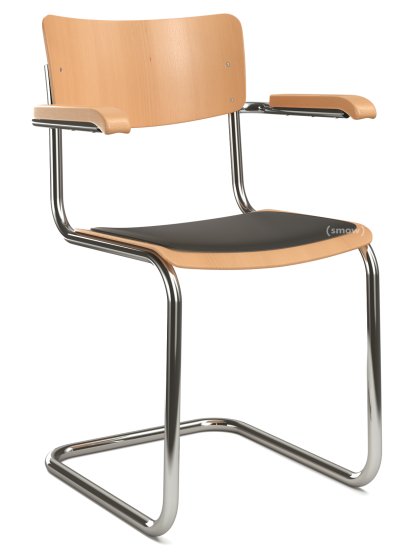
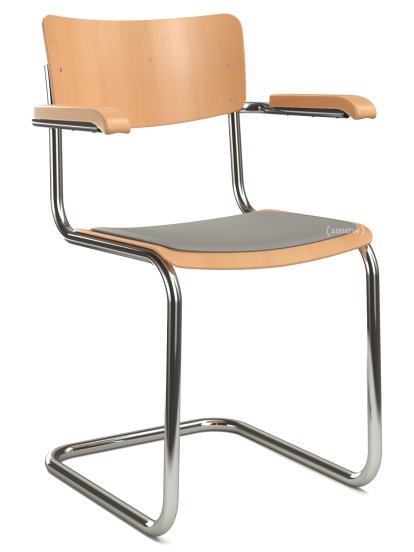
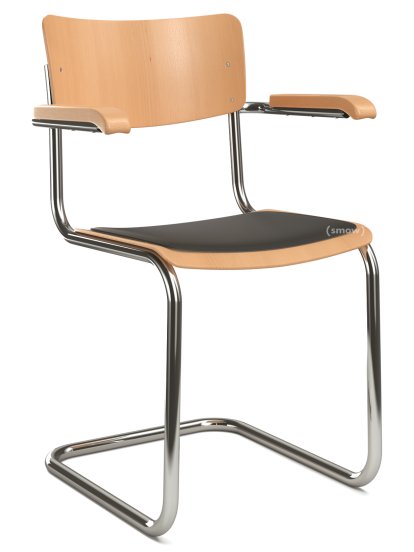
Chaise cantilever S 43 F classique avec accotoirs
de Mart Stam — à partir de 591,00 €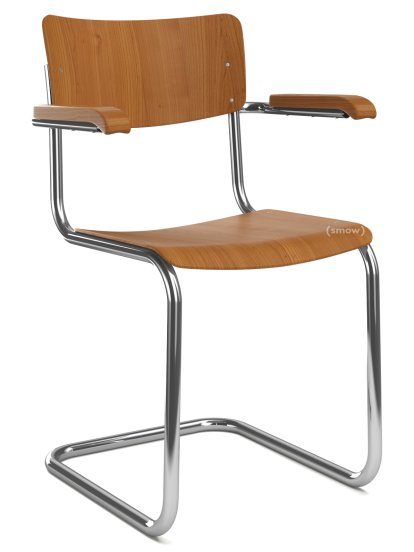
a été ajouté à votre liste de favoris

Cliquez ici pour plus d’images


Les classiques Thonet à prix avantageux – 15 % de réduction sur les icônes du design
Depuis plus de deux siècles, Thonet marque de son empreinte le design mobilier moderne avec des formes intemporelles et un savoir-faire artisanal magistral. Découvrez la diversité des produits, du bois courbé au tube d'acier, et bénéficiez d'une réduction de 15 % sur l'ensemble de la gamme Thonet* – offre valable jusqu'au 31 octobre 2026.
* À l'exception de la collection JS . Thonet
Détails
| Type de produit | Chaise Cantilever / en porte-à-faux |
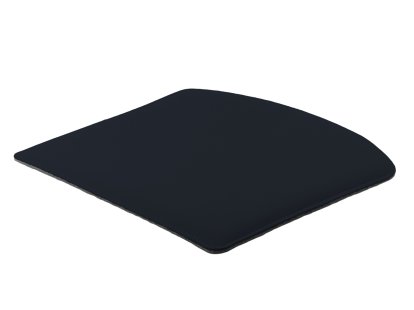
| Dimensions | 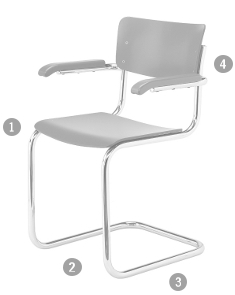 (1) Hauteur d'assise: 45 cm (2) Largeur: 56 cm (3) Profondeur: 52 cm (4) Hauteur: 82 cm Coussin d'assise (facultatif): Largeur: 39,6 cm Profondeur: 38,9 cm Hauteur: 0,5 cm, avec rembourrage 1,6 cm |
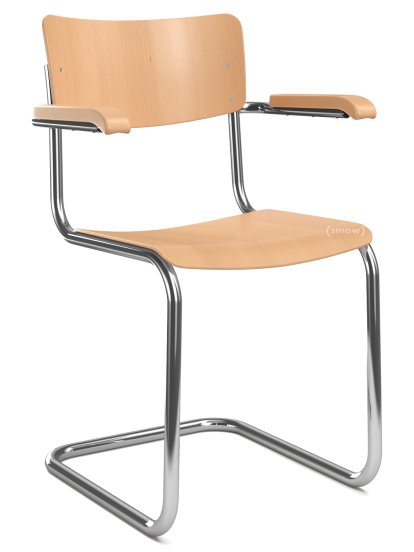
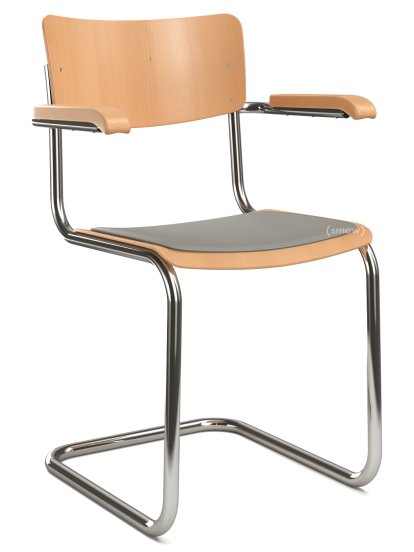
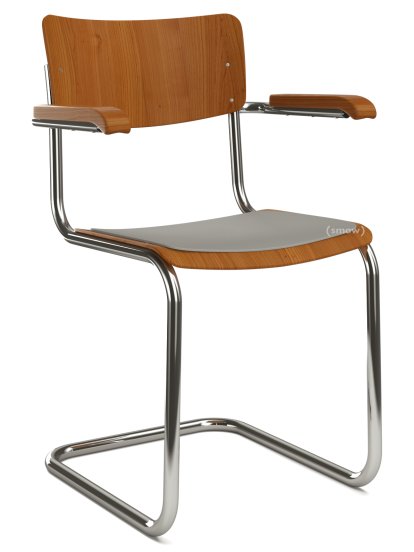
| Couleurs | Coussin d'assise (facultatif)  Hêtre teinté      Hêtre laqué   Structure    |
| Matériaux | Assise et dossier: contreplaqué moulé hêtre Structure: tube d'acier chromé ou revêtu par poudre Coussin d'assise (facultatif): feutre (100 % laine), rembourrage: mousse Patins (facultatif): plastique, noir ou transparent |
| Variantes | Disponible en différentes finitions En option avec coussin d'assise en feutre rembourré/non rembourré En option avec patins pour sols durs La version sans accotoirs S 43 Classique et Chaise S 43 K pour enfant sont également disponibles |
| Accessoires | Les Coussins d'assise pour S 43F Classique de chez Parkhaus Berlin sont disponibles en plusieurs autres couleurs |
| Fonctions & Propriétés | Capacité de charge jusqu'à 110 kg Non-empilable |
| Entretien | L'utilisation d'un nettoyant doux et neutre sur un chiffon humide et tiède est recommandée. Veuillez cliquer sur l’image afin de consulter la notice d'entretien détaillée (env. 0,7 MB).  |
| Certificats | DIN EN 16139 niveau I (meubles pour les zones non résidentielles) |
| Durabilité | Thonet a déclaré que la durabilité était un principe d'entreprise. Le fabricant optimise en permanence tous les processus, de la production/technologie, de la gestion des matériaux et de la recyclabilité aux itinéraires de transport, et veille constamment à économiser les ressources en énergie et en matériaux. Enfin et surtout, les principes sociaux et éthiques figurent parmi les priorités absolues. Thonet a reçu le "Green Globe Certificate" pour ses mesures de gestion durable et respectueuse de l'environnement - pour plus d'informations, cliquez ici. |
| Garantie | 24 mois |
| Famille de produits | Chaises Thonet Cantilever |
| Données & Détails produit | Veuillez cliquer sur l’image afin d’obtenir les informations détaillées du produit (env. 2,4 MB).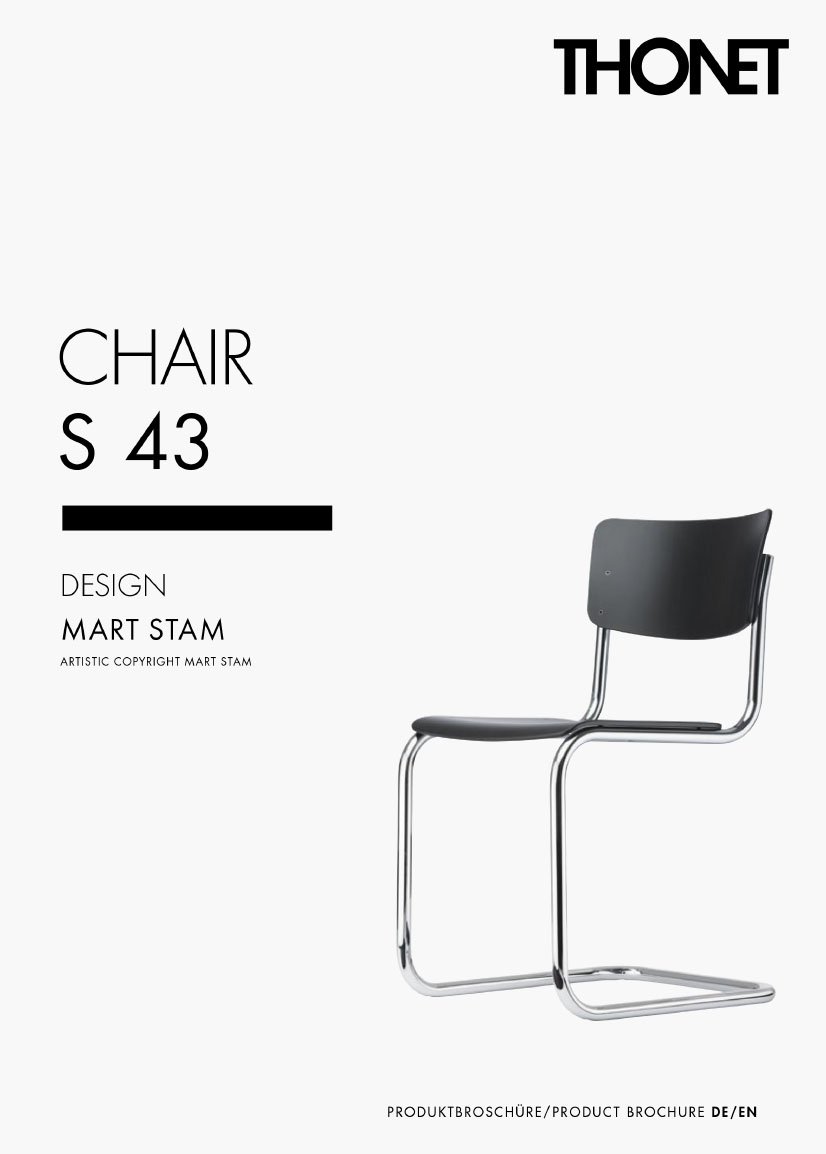 |
Offres

FAQ
Peut-on ajouter des patin à la chaise S 43 F Classique Thonet par la suite ?
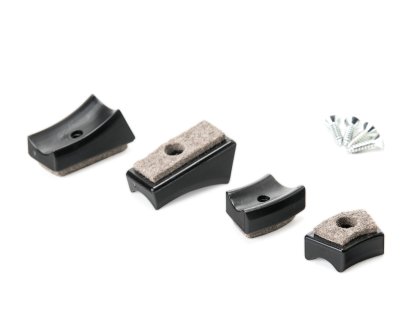
Oui. Pour le montage des patins des chaises en porte-à-faux, il faut se fournir les patins Thonet spécialement conçus pour le carde en tube d'acier. Les patins en plastique (transparent ou noir) avec insert en feutre, augmentent la hauteur de la chaise de 11 mm, et coûtent 29€ par set/chaise.Sur les anciens modèles de cantilever produits avant 2010, les cadres Thonet étaient pré-perforés en standard et les patins peuvent être montés comme suit : percez les trous vous-même avec un foret de 4,2 mm (disponible dans les magasins de bricolage ou bien le foret Thonet pour 6€ (tournevis sans fil à basse vitesse). Les patins en feutre peuvent ensuite être fixés avec les vis fournies.
Est-il possible de commander à posteriori le dossier et l'assise de la chaise S 43 F Classique Thonet ?
Les parties de la chaise S 43 ne peuvent être simplemant commandées et livrées puisque le dossier et l'assise ne sont pas visés à la structure mais sont fixés par rivets. Par ailleurs, au fil des années, la forme et la dimension des surfaces ont changé s'adaptant à l'évolution physiologique des individus. Selon l'année de fabrication de la chaise, les parties produites aujourd'hui ne s'adapteront donc pas à la structure de base. Ceci-dit, Thonet propose de confectionner dans ses ateliers les parties de la chaise en se conformant à l'actuelle masse corporelle et en s'ajustant à la structure de base que vous disposez.
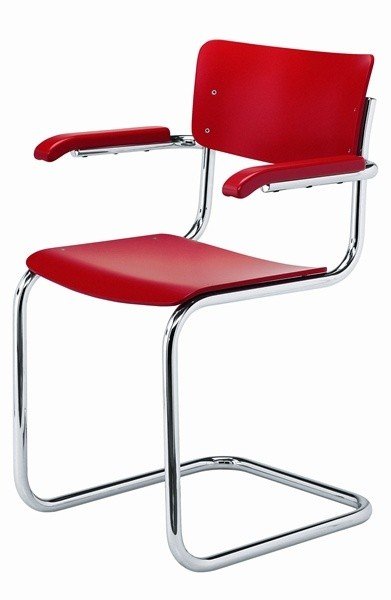
Avec la chaise S 43F, le designer et architecte néerlandais Mart Stam offrit un nouveau classique à inscrire dans l’histoire du design. C’est en 1926 que Stam présenta lors de l’exposition « L’appartement » près de Stuttgart la première version d’une chaise cantilever, la S 33. À cette même occasion, Ludwig Mies van der Rohe exposa également le design d’une chaise cantilever. Ce classique cantilever S 43F pour Thonet se reconnaît par son design réduit, son esthétisme simple et son design fonctionnel. Son apparition à cette exposition annonçait un autre le style et revoyait à une nouvelle ère, à un sentiment de modernité. Le phénomène de la chaise cantilever est fortement à associer au mouvement du Bauhaus. Effectivement, c’est dans les ateliers de métallurgies que les étudiants expérimentaient divers métaux, selon leurs propriétés, résultant ainsi à la production de plusieurs structures tubulaires de chaises. La chaise S 43 découle de ses recherches et est incontestablement originaire du Bauhaus. Contrairement aux autres chaises de l'époque, notamment leur assise et leur dossier, la S 43F est composée de contreplaqué moulé. Aussi, elle diverge de la chaise S 43 pour Thonet puisque qu’elle possède des accotoirs.
Production
Tous les meubles Thonet sont produits par la compagnie dans l’usine de Frankenberg en Allemagne. Fondée en 1819 par Michael Thonet, l'entreprise Thonet devint populaire notamment avec les célèbres chaises de bistro en bois courbé, équipant de nombreux cafés français au cours du 19ème siècle. À partir de 1920, Thonet cherche des procédés innovant et s’oriente vers la création de tubes en acier courbé. En 1931, Mart Stam produit avec le soutien de Thonet, la chaise S 43F. Cette chaise, devenue une icône du design, est constituée d’une seule pièce puisqu’il n’y a qu’un tube de métal courbé soit poli ou satiné (dit aussi brossé). Le bois de placage, utilisé pour le dossier et la surface d’assise et disponible en plusieurs variantes, provient de forêts européennes où la gestion est contrôlée et protégée. Thonet prend très au sérieux la question environnementale et s’efforce d’utiliser des procédés de fabrication respectueux de la nature. Par exemple, pour le laquage de ces chaises, Thonet a développé un produit nommé Hydrolaque ne contenant que 2 % de solvant. La garantie des meubles Thonet repose donc sur des matériaux de haut gamme, sélectionnés pour une utilisation durable et minimisant au maximum l’impact environnemental néfaste que la production pourrait engendrer.
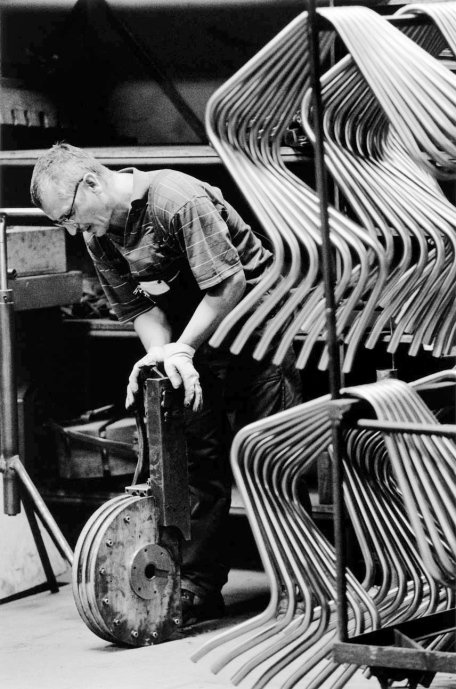
Les tubulaires d'acier pour la fabrication de chaises Cantilever Thonet
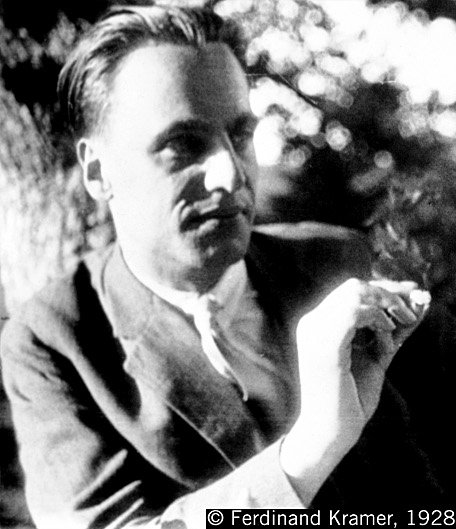
Le designer de la S 43F: Mart Stam
Contexte historique
Durant la période communément appelée « années dorées », le monde connaît des changements sur le plan économique, social et culturel. L’école du Bauhaus, ouverte en 1919 à Weimar en Allemagne, est indéniablement la première à comprendre ces bouleversements et à en tirer parti pour le design d’ameublement. Le design de la chaise cantilever S 43 de Mart Stam fut à ce moment considéré comme révolutionnaire et symbole du modernisme classique. L’aspect central des meubles modernes du Bauhaus réside dans la possibilité de produire des objets industriels et accessibles à un large public de par ses prix abordables. En 1933, Thonet équipa la bibliothèque nationale de Leipzig avec la chaise en porte-à-faux S 43F, qui, aujourd’hui encore, est utilisée. Thonet est réputé pour la fabrication de meubles de qualité, durables et respectant l’environnement.
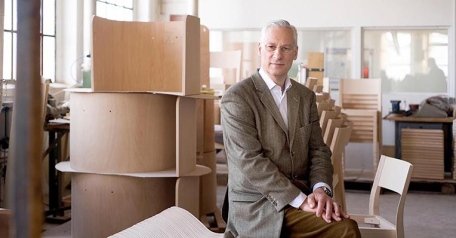
Peter Thonet, descendant direct du fondateur Michael Thonet et actuel gérant de l'entreprise
Designer
Né le 5 août 1899 à Purmerend aux Pays-Bas, Mart Stam passa la plus grande partie de sa vie en Allemagne, en Suisse et au sein de l’union soviétique. Dans les années 1920, Mart Stam incorpora le Bauhaus de Dessau où il conçut ses chaises en porte-à-faux. En 1930, Mart Stam, accompagné de sa femme Lotte Beese, part travailler en URSS où il se consacra à des projets d’urbanisme. Mais en 1931, il met au point la première chaise S 43F pour Thonet. En 1935, Stam retourne aux Pays-Bas et travaille comme architecte à Amsterdam. En 1948, il devint directeur de l’Académie des arts de Dresde, puis, de celle de Berlin située à Weissensee en 1935. Le débat sur le formalisme au sein de l’Allemagne de l’Est le pousse à quitter son poste à Weissensee en 1952. En 1966, il émigre en Suisse où il mourut le 2 février 1986.
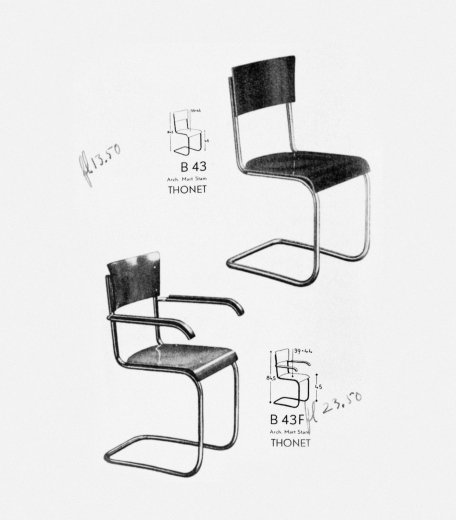
Esquisses de la chaise B 43, précurseuse de la S 43F de Mart Stam
Fabricant
En 1819, Michael Thonet ouvre une menuiserie pour le bâtiment et pour le mobilier à Boppard sur le Rhin, en Allemagne : un commerce qui se développa davantage dans le domaine de l’ameublement de design. La notoriété du fabricant se fit surtout connaître avec le procédé de bois courbé qui permit, en 1950, la création de chaises de bistro comme la chaise 214. Quelques années après, l’entreprise innova avec la création de tubulaire en acier et devient ainsi le producteur le plus populaire, notamment, avec les travaux des designers et architectes Mart Stam et de sa chaise S 43F et Marcel Breuer avec ses chaises S 32/64. Dans les deux cas, l’entreprise Thonet testa de nouveaux matériaux et procédés. Avec ses nouvelles créations, le succès fut immédiat ! Le siège de l’entreprise se trouve à Frankenberg / Eder en Allemagne. Elle est aujourd’hui dirigée par le descendant direct de Michael Thonet, Peter Thonet. Le portfolio de Thonet ne se contente pas dans de reproduire les classiques en bois courbé ou en porte-à-faux, mais participe au fleurissement du design moderne en collaborant avec des designers novateurs comme James Irvine, Delphin Design et Stefan Diez.
Accessoires
Vous aimerez aussi